Steel building prices may vary by location. Request your custom quote today, installed across the Midwest in 2–4 weeks.
Get a Free Quote

Steel building prices may vary by location. Request your custom quote today, installed across the Midwest in 2–4 weeks.
Get a Free Quote

Shop for a steel building long enough and you will run into two terms that sound similar and are not: red iron buildings and tubular steel buildings. Both are “metal buildings.” Both use steel frames and steel panels. But they are engineered, delivered, founded and priced very differently, and choosing the wrong type means either overpaying for strength you will never use or buying a building that cannot do the job. We install tubular steel buildings and do not sell red iron, so this guide is also an honest account of when you should look elsewhere.
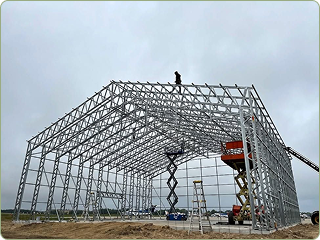
A red iron building is framed with heavy structural steel: solid I-beam columns and rafters bolted together into rigid frames. The name comes from the red oxide primer traditionally applied to the beams. This is the construction used for warehouses, factories, aircraft hangars, large retail buildings and big agricultural arenas. Its defining strength is span: a rigid frame can cross very wide spaces with no interior columns and can be engineered for heavy extra loads such as overhead cranes or mezzanines.
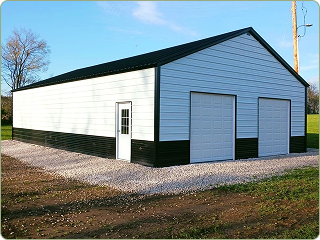
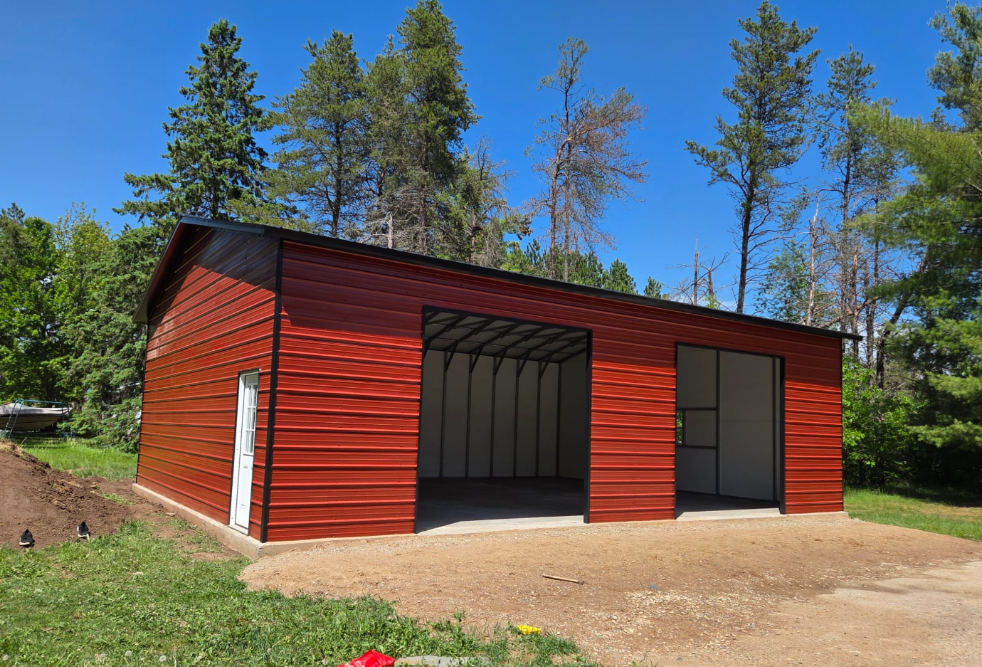
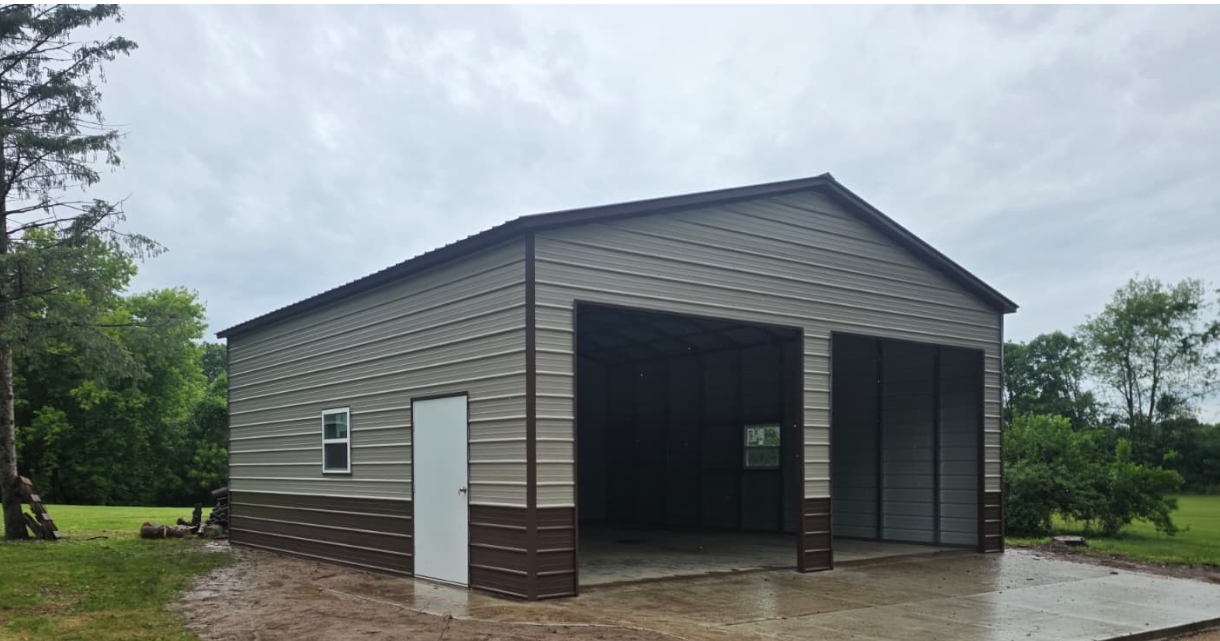
A tubular steel building is framed with galvanized steel tubing formed into bows or trusses and legs, with steel roof and wall panels fastened to the frame. It is the construction behind metal carports, garages, RV covers, barns and most residential and small-farm workshops. On our buildings the standard frame is 14-gauge tubing, with thicker 12-gauge available, and every structure is engineer-certified for the snow load and wind at its location.
Tubular steel covers the sizes most property owners need. The workshops we install, for example, run up to 60 feet wide and 100 feet long. Red iron takes over beyond that range, or when a building needs very tall eaves, crane rails or heavy suspended loads.
A red iron frame concentrates large loads at each column, so it requires an engineered concrete foundation with anchor bolts cast in exactly the right places before the steel arrives. A tubular building spreads its load along a base rail and can be installed on concrete, asphalt, gravel or level ground with the appropriate anchors. That flexibility alone can change a project budget significantly. Our anchoring guide explains the options.
Tubular buildings are delivered and assembled by a small crew with hand tools, typically in a day for most structures; our usual lead time is 2 to 5 weeks, weather permitting. Red iron buildings are usually sold as kits that must be erected with lifting equipment by a separate erection crew or contractor, after the foundation has cured, and the overall schedule is measured in months rather than weeks.
A red iron quote is often for the building package only: steel delivered to the site, with foundation, erection, doors and insulation contracted separately. Our prices include delivery and installation. When you compare the two, make sure you are comparing the finished building, not a kit against an installed structure.
Tubular frames are galvanized, which gives the steel a sacrificial zinc coating. Red iron beams are typically protected by primer paint. Both rely on the roof and walls to keep the frame dry. For how galvanizing works, see does galvanized steel rust.
For small and mid-size buildings, tubular steel is generally the more economical route once foundation and erection are counted, because it avoids the engineered foundation and crane work. As buildings get very large, red iron becomes the appropriate and efficient system. Prices for both move with the steel market, so compare current, complete quotes.
In those cases, talk to a red iron manufacturer and a local erector. That is not a building we supply.
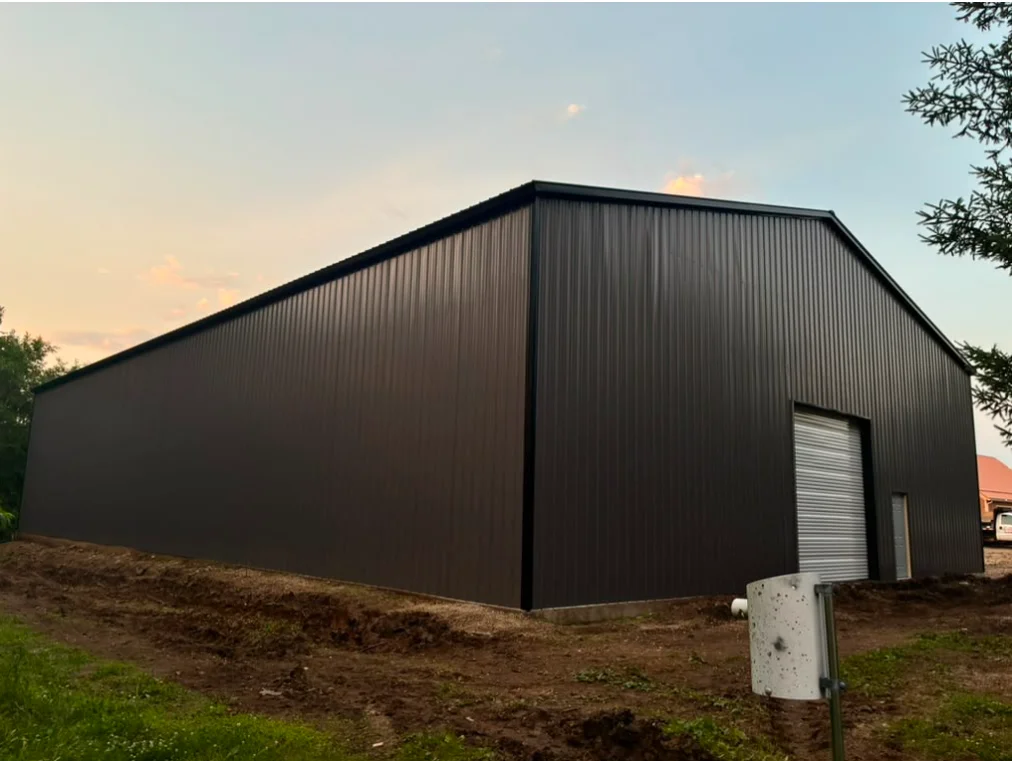
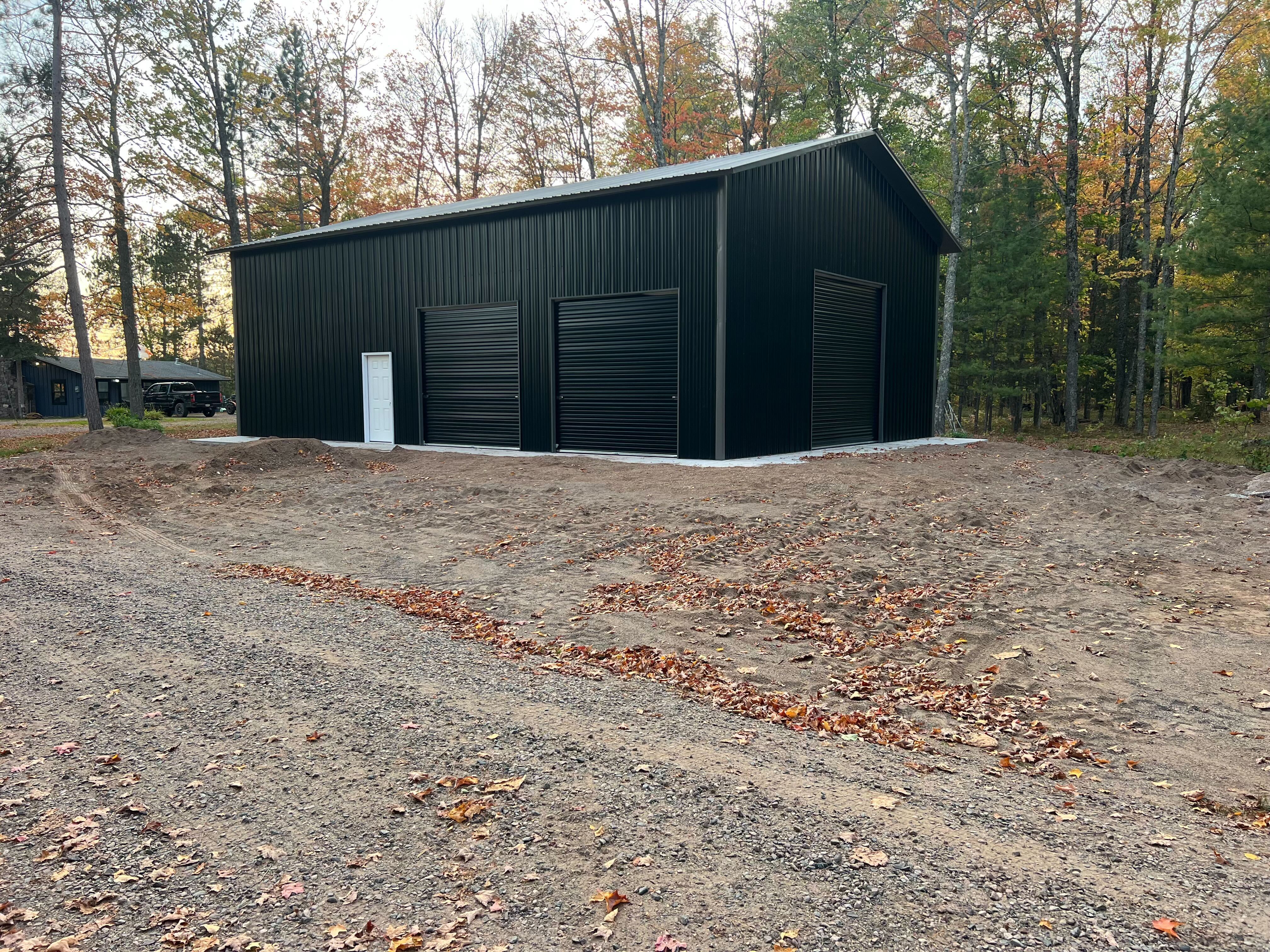
Typical examples are a steel workshop, a metal garage or a barn-style equipment building.
There is a third option in this conversation: the wood post-frame building, or pole barn. It competes with tubular steel at small and mid sizes and with red iron for large agricultural buildings. We compare it in detail in pole barn vs. metal building.
Because the structural steel beams are traditionally coated with a red oxide primer. The frame is steel, not iron.
Red iron frames can carry heavier loads over longer spans. For garages, carports and typical workshops, a properly engineered tubular frame is designed for the loads those buildings actually see.
No. We install galvanized tubular steel buildings and do not offer red iron or wood structures.
Many small businesses use them for storage, equipment and work space. Commercial use can bring additional local code requirements, so check with your building department first.
Tell us the size and use you have in mind. If a tubular steel building is right for it, we will quote it installed; if it is not, we will tell you. Request a free quote, design it yourself in 3D, or call (262) 383-4347.
This guide is general information. Structural requirements, size limits, pricing and commercial code or permit rules must be confirmed for your property with a Wisconsin Carports Building Specialist and your municipality.
Get a free, no-obligation custom quote, engineer-certified and installed in 2–4 weeks.
Design It Yourself · In 3D
Watch your structure come together panel by panel. Pick the size, roof, doors, colors and add-ons, andsee your price update live, no pressure, no hidden fees.
.png)
Live, transparent pricing as you build
Every option visualized before you order
Save your design and get an exact installed quote
.png)
Featured Models
Real configurations with estimated pricing, delivery and installation included. Every build is custom-made for your project.
.jpg)

.png)
.png)
from

4.9
.png)
.png)
.png)
from
4.9
from
4.9

Installed Throughout the Midwest
Beyond the Build
Tricky site? We have you covered, literally. And every structure is backed for the long haul.
.png)
.png)
.png)

.png)
No obligation, best price guaranteed across the Midwest.

.png)
.png)
.png)


